

What Happens During a TMS Session: Step-by-Step

Table of Contents
What Is TMS Therapy and How Does It Work During a Session
Preparing for TMS Therapy: What You Need to Know Before Your First Appointment
The TMS Session Experience: What Does TMS Feel Like
The Sensory Breakdown: Sounds, Sensations, and Physical Comfort
Your Role and Autonomy During Treatment
How Long Does TMS Take: Session Duration and Treatment Timeline
What to Expect After Your TMS Session: Recovery and Next Steps
Safety, Side Effects, and What You Should Know
First Appointment vs. Follow-Up Sessions: What Changes
Motor Threshold Mapping: The First-Session Essential
Timeline and Structure: First Appointment vs. Follow-Ups
Sensory and Psychological Differences Across Sessions
Cumulative Response and Session Milestones
Frequently Asked Questions
Last Updated: September 23, 2026
What Is TMS Therapy and How Does It Work During a Session
Transcranial magnetic stimulation, or TMS, is a non-invasive procedure that uses electromagnetic coils to deliver magnetic pulses to your brain. During a TMS session, a physician positions a coil against your scalp and activates it. The magnetic pulses stimulate nerve cells in brain regions associated with mood regulation and depression symptoms.
TMS works differently than medication. Instead of chemicals in your bloodstream, magnetic pulses directly target the prefrontal cortex. This area controls mood, motivation, and emotional processing. When depression hasn't responded to antidepressants, TMS offers an alternative path to symptom relief.
At Newtown TMS, we use physician-administered TMS combined with talk therapy. Dr. John Woodall, a former Harvard faculty member, personally oversees treatment to ensure the highest standard of care. This combination addresses both the neurological and psychological aspects of depression.
The procedure is outpatient-based. You don't need anesthesia. You remain awake and alert throughout. Many patients describe the experience as surprisingly manageable once they understand what to expect.
Preparing for TMS Therapy: What You Need to Know Before Your First Appointment
Preparation for your first TMS session starts with a consultation. Your physician will review your medical history, current medications, and previous treatment attempts. This conversation determines whether TMS is right for you.
A critical step is motor threshold mapping. Your physician will deliver brief magnetic pulses to find the exact intensity needed to trigger a small muscle response in your hand or thumb. This establishes your personalized treatment intensity. The mapping process takes about 10-15 minutes.
Before your appointment, plan these practical details:
Wear comfortable, loose-fitting clothing
Remove all metal objects: jewelry, watches, hairpins, glasses
Avoid caffeine for several hours beforehand
Arrange transportation if you feel fatigued afterward
Plan your schedule so you're not rushed
Metal near the coil interferes with the magnetic field. Even small items like earrings or hair clips can affect treatment quality. Check your pockets and hair carefully.
Tell your physician about any metal implants. Certain implants are incompatible with TMS. Pacemakers, cochlear implants, and some types of brain implants may prevent you from receiving treatment. Your doctor will clarify this during your consultation.
Medications typically continue as prescribed. You don't stop antidepressants before starting TMS. The combination of medication plus TMS often produces better results than either alone.
The TMS Session Experience: What Does TMS Feel Like

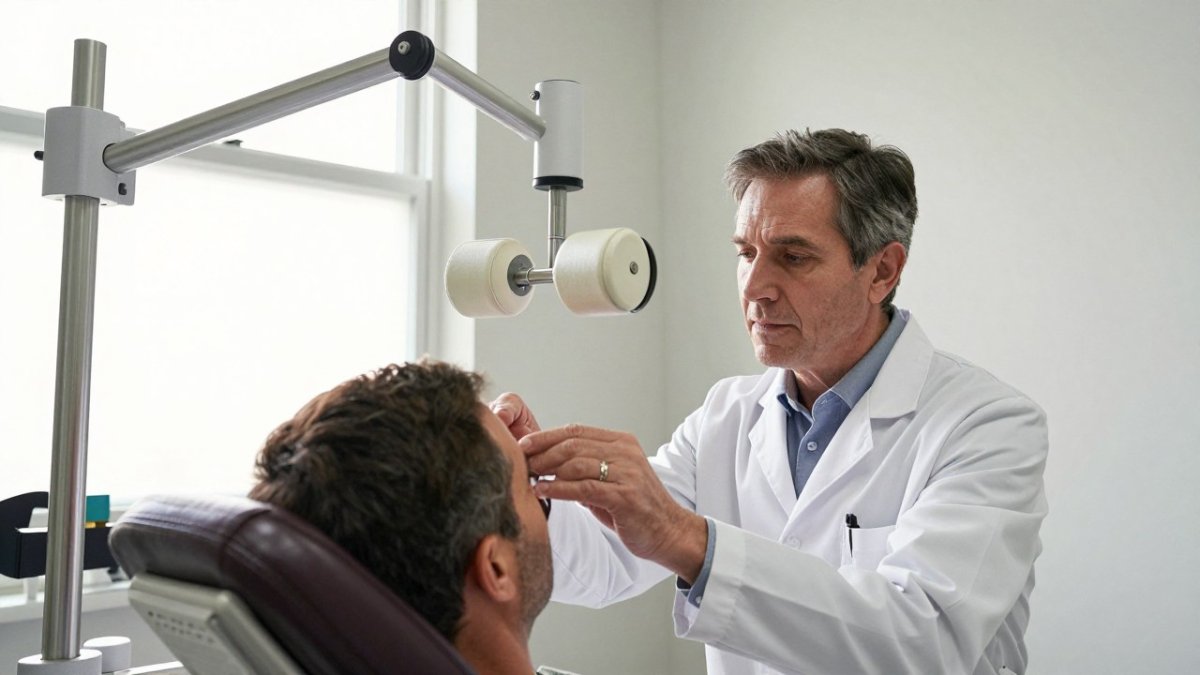
A typical TMS session lasts 30-40 minutes. You sit in a comfortable treatment chair. The physician positions the electromagnetic coil against your scalp, usually over the left prefrontal cortex. Once positioned, the coil stays in place for the entire session.
The Sensory Breakdown: Sounds, Sensations, and Physical Comfort
The coil produces a distinctive tapping sensation. Many patients describe it as a rhythmic clicking or knocking feeling against the scalp. The sound is audible, a repetitive tapping noise, but it's not loud enough to require ear protection in most cases.
Sensations vary by person. Some feel mild discomfort. Others report no pain at all. The tapping sensation is the most common experience. Some patients describe a slight pulling feeling on the scalp muscles.
Scalp discomfort typically decreases over the first few sessions. Your brain adapts. The sensation becomes familiar and less noticeable. By week two or three, many patients report feeling almost nothing.
The treatment room remains calm and quiet. Soft lighting reduces overstimulation. Your physician monitors you throughout. If discomfort becomes intense, you can signal immediately. Treatment stops. Your comfort matters.
Your Role and Autonomy During Treatment
You maintain full control during treatment. You're awake. You can talk. You can move (except your head, which must stay still for the coil to remain positioned correctly).
If the sensation becomes unbearable, raise your hand. Your physician will pause immediately. There's no penalty for stopping. Your autonomy is respected.
Many patients use this time productively. Some listen to music through headphones. Others relax and let their mind wander. A few use the time to think through personal matters. The choice is yours.
You drive yourself to and from appointments if you feel capable. Some patients report mild fatigue after treatment. Others feel energized. Individual responses vary. Your physician will advise whether you need someone to drive you.
How Long Does TMS Take: Session Duration and Treatment Timeline
A single TMS session runs 30-40 minutes from start to finish. The actual stimulation portion, when the coil is active, takes about 19-37 minutes, depending on your treatment protocol.
Most patients receive TMS five days per week for four to six weeks. This is the standard acute treatment phase. The frequency matters. Five sessions per week produces faster symptom improvement than fewer sessions.
Here's what a typical timeline looks like:
Week 1-2: Initial sessions establish your tolerance. Motor threshold mapping happens first.
Week 3-4: Symptom changes often begin. Some patients notice mood improvement. Others report better sleep.
Week 5-6: Many patients experience meaningful symptom reduction. Energy and motivation often improve.
Week 7-8: Additional sessions may continue if symptom improvement is still occurring.
Total treatment duration typically spans four to eight weeks. By the end of acute treatment, many patients achieve significant symptom reduction or remission.
Maintenance therapy comes next for some patients. Once you respond well to TMS, periodic sessions prevent relapse. Maintenance might involve one session per week or one per month, depending on your needs and your physician's recommendation.
What to Expect After Your TMS Session: Recovery and Next Steps
Recovery from TMS is straightforward. There's no downtime. You don't need to rest. You can return to work, exercise, or normal activities immediately.
Some patients report mild fatigue in the first week. This typically subsides quickly. A few experience mild headache at the treatment site. Over-the-counter pain relief handles this easily.
Mood changes develop gradually. You won't feel different immediately after your first session. Improvement typically appears over days or weeks as treatment accumulates. By week three or four, changes become noticeable.
Keep a mood journal. Track your sleep, energy, and motivation daily. Patterns emerge over time. Your physician uses these observations to adjust treatment if needed.
Attend every scheduled session. Consistency matters for TMS effectiveness. Missed sessions delay symptom improvement. Your commitment to the treatment schedule directly impacts your results.
Safety, Side Effects, and What You Should Know
TMS has a strong safety profile. It's FDA-cleared for depression treatment. Serious side effects are rare when administered by a qualified physician.
Common side effects are mild and temporary:
Scalp discomfort or tapping sensation
Mild headache
Temporary muscle twitching in the face
Slight neck tension
These typically resolve within the first week of treatment. They're not dangerous. They're your nervous system adjusting to the magnetic stimulation.
Seizure risk is extremely low, less than one in 1,000 patients.
First Appointment vs. Follow-Up Sessions: What Changes
Your first appointment differs significantly from all subsequent sessions because it includes motor threshold mapping, a critical calibration step that determines your personalized treatment intensity.
Motor Threshold Mapping: The First-Session Essential
Motor threshold mapping is the process of finding the minimum magnetic intensity needed to produce a visible muscle response in your hand or thumb. Your physician delivers brief, single magnetic pulses at gradually increasing intensities until a small twitch appears in your thumb or hand. This twitch confirms that the magnetic pulse has reached the motor cortex, the brain region responsible for movement.
Timeline and Structure: First Appointment vs. Follow-Ups
Your initial appointment is substantially longer than subsequent sessions. Plan for 60-90 minutes total. This includes:
Detailed health history review (15-20 minutes)
Medication and psychiatric history (10-15 minutes)
Informed consent and safety screening (10 minutes)
Motor threshold mapping (10-15 minutes)
First treatment session (30-40 minutes)
Sensory and Psychological Differences Across Sessions
The sensation often feels less intense in sessions 2-5 compared to the first appointment. This is partly because motor threshold mapping involves gradual intensity increases, which can feel more pronounced than the steady, consistent intensity of standard treatment. Additionally, familiarity reduces perception of discomfort. What felt novel and noticeable in week one becomes routine by week four, even though the physical stimulus is identical.
Cumulative Response and Session Milestones
By sessions 10-15 (typically the end of week 2 or early week 3), most patients report noticeable symptom improvement. Depression begins to lift. Energy and motivation increase. Sleep often improves. These changes reinforce your commitment to the treatment schedule and provide concrete evidence that the procedure is working. This milestone is psychologically significant, it shifts the experience from "I'm undergoing a treatment" to "I'm getting better."
Frequently Asked Questions
Do I need to be sedated or put to sleep during a TMS session?
No. TMS is a non-invasive outpatient procedure that does not require anesthesia or sedation. You remain fully awake and alert throughout the entire session. This means you can drive yourself home afterward and return to your normal activities. Your physician will explain everything happening during the procedure so you know what to expect.
What are the most common side effects of TMS therapy?
The most frequently reported side effects are mild and temporary. Scalp discomfort or tapping sensations at the treatment site are typical during sessions. Some patients experience mild headaches after treatment, which usually resolve within a few hours. These effects typically diminish as your body adjusts over the first week or two of your treatment course. Serious side effects are rare when TMS is administered by a qualified physician in a clinical setting.
How long does a typical TMS treatment course last, and when will I notice improvement?
A standard TMS treatment course typically involves 20 to 30 sessions conducted over 4 to 6 weeks, with sessions usually scheduled 5 days per week. Each session lasts 30 to 40 minutes. Some patients notice improvement in depression symptoms within the first 1 to 2 weeks, while others may take 3 to 4 weeks to experience therapeutic response. The timeline varies based on your individual condition and how your brain responds to the magnetic pulses.
Can I drive myself to and from my TMS appointments?
Yes. Since TMS does not require anesthesia and you remain fully conscious throughout the session, you can drive yourself home immediately after treatment. There is no recovery time needed, and most patients return to work or other daily activities right away. However, if you feel any unusual effects, discuss them with your physician before driving.
Call Newtown TMS for a free consultation


Comments