

TMS Therapy Does Not Replace Talk Therapy

Table of Contents
What Transcranial Magnetic Stimulation Actually Does
Why TMS Cannot Replace Talk Therapy
What the evidence actually shows
TMS vs Talk Therapy: How They Work Together
Combining TMS and Therapy for Better Outcomes
What to Do If Talk Therapy Doesn't Work
How Often Is TMS Therapy and What to Expect
TMS course vs. therapy course, side by side
Access, insurance, and out-of-pocket costs
Common questions about frequency and timing
Start Your Combined Treatment Plan at Newtown TMS
Frequently Asked Questions
Last Updated: October 25, 2026
What Transcranial Magnetic Stimulation Actually Does
Transcranial magnetic stimulation (TMS) is a non-invasive brain stimulation technique that uses magnetic pulses to activate brain cells in areas linked to mood regulation. Unlike talk therapy, which works through conversation and behavioral change, TMS targets the biological side of depression directly.
A 2024 review describes TMS as an effective and safe treatment for adults with major depressive disorder for whom medications have not worked (Brain stimulation research review). The treatment typically involves multiple sessions over several weeks.
Here's what makes TMS different from other depression treatments:
Targets brain biology directly, works on neural activity, not behavior or thoughts
Non-invasive, no surgery, no anesthesia, no implants
FDA-approved, cleared for treatment-resistant depression and other conditions
Allows normal daily life, you can return to work or activities immediately after sessions
No systemic medication effects, doesn't enter your bloodstream like antidepressants do
The key point: TMS addresses one piece of depression. It does not replace the psychological work that talk therapy provides.
Why TMS Cannot Replace Talk Therapy
TMS and talk therapy work on different aspects of depression. Explore the broader context of non-invasive depression treatments to deepen your understanding of TMS's role among other options.
TMS targets brain biology. It delivers magnetic pulses to neural pathways involved in mood regulation. Talk therapy targets thought patterns, behaviors, and emotional processing.
According to Clarity Clinic's analysis, TMS complements talk therapy rather than replacing it. Clarity Clinic notes that TMS targets the biological side of depression and does not replace talk therapy.
Consider this scenario: You feel depressed. Your brain chemistry may be contributing to that feeling. TMS can help reset the neural activity.
Real outcomes show this clearly. A 2026 news report found that 86% of participants experienced relief from PTSD symptoms when TMS was used in addition to talk therapy (Spectrum News PTSD study).
Here's what each approach does and doesn't do:
Approach | Targets | Does NOT Address |
TMS | Brain biology, neural activity, mood regulation | Thought patterns, behaviors, life circumstances |
Talk Therapy | Thoughts, behaviors, coping skills, emotional processing | Brain chemistry, neural pathways |
What the evidence actually shows
The strongest evidence for TMS is in treatment-resistant depression, people who have not responded to adequate trials of medication.
That distinction matters. Most published TMS trials compare TMS plus usual care against sham TMS plus usual care. "Usual care" frequently includes ongoing medication and psychotherapy.
A common pattern in clinical practice: a patient starts TMS, mood lifts enough to engage in therapy, and the therapy work then consolidates the gain. The reverse also happens, therapy builds insight and coping skills, but severe depression blocks engagement until TMS reduces the biological weight.
Key Takeaway The honest summary: TMS is not a substitute for talk therapy, and talk therapy is not a substitute for TMS. The evidence supports combining them, especially in treatment-resistant depression. Anyone promising that one replaces the other is overselling.
The bottom line: TMS cannot replace talk therapy because they solve different problems. The better question is how to sequence and combine them for your situation.
TMS vs Talk Therapy: How They Work Together
The real power emerges when TMS and talk therapy work as a team. At Newtown TMS, we combine both approaches because the evidence supports it.
Here's how they complement each other. TMS improves your mood baseline by addressing brain biology. With your mood stabilized, talk therapy becomes more effective.
Think of it this way: If depression is a locked door, TMS opens it. Talk therapy teaches you how to walk through and not get locked in again.
When should you use both together? Here are the situations where combination treatment works best:
You've tried multiple antidepressants without success
Depression interferes with your ability to engage in therapy
You want to reduce medication dependence while maintaining mental health
You have chronic depression that keeps returning despite therapy alone
You need faster symptom relief to function at work or home
Mayo Clinic describes repetitive TMS as an option when standard treatments such as medicines and psychotherapy do not work (Mayo Clinic TMS overview). But that doesn't mean you stop therapy.
The research backs this.
Combining TMS and Therapy for Better Outcomes
When TMS and talk therapy are combined strategically, outcomes improve. This is where treatment becomes most effective.

The combination works because each approach prepares you for the other. TMS reduces the biological barrier to therapy engagement.
Here's what a combined treatment plan typically looks like:
Weeks 1-4: Start TMS sessions (typically 3-5 per week) while beginning or continuing therapy
Weeks 4-8: Continue TMS while therapy focuses on processing emotions and building skills
Weeks 8-12: Reduce TMS frequency as mood stabilizes, maintain therapy weekly
Month 4+: Transition to maintenance TMS (if needed) and ongoing therapy for relapse prevention
The timing matters. You don't wait for TMS to finish before starting therapy. You don't skip therapy because you're doing TMS. Both happen together, each supporting the other.
What outcomes should you expect? Patients report:
Noticeable mood improvement
Better ability to engage in therapy
Sustained improvement when combining both treatments
What to Do If Talk Therapy Doesn't Work
If you've tried talk therapy and it hasn't helped, TMS becomes a valuable option. But this situation needs careful evaluation.
First, understand why therapy may not have worked. Common reasons include:
Wrong therapy type, Different approaches (CBT, psychodynamic, DBT) work for different people
Wrong therapist match, Therapy depends on the relationship between you and your therapist
Timing, Depression severity sometimes makes therapy engagement impossible
Underlying biology, Brain chemistry may need medication or TMS support before therapy can work
If you've done therapy consistently for 12+ weeks with a qualified therapist and seen no improvement, your depression may be treatment-resistant. Read the in-depth guide to TMS for treatment-resistant depression to understand this specific situation. This is where TMS helps. TMS for treatment-resistant depression resource explores this specific situation in depth.
Here's what to consider:
Have you tried different therapy approaches (not just different therapists)?
Have you given each approach at least 8-12 weeks?
Have you addressed practical barriers (scheduling, cost, transportation)?
Have you considered whether medication might help therapy work better?
Have you explored whether depression severity is preventing therapy engagement?
If the answer to most of these is yes, TMS combined with therapy is worth exploring. The combination often succeeds where either approach alone has failed.
How Often Is TMS Therapy and What to Expect
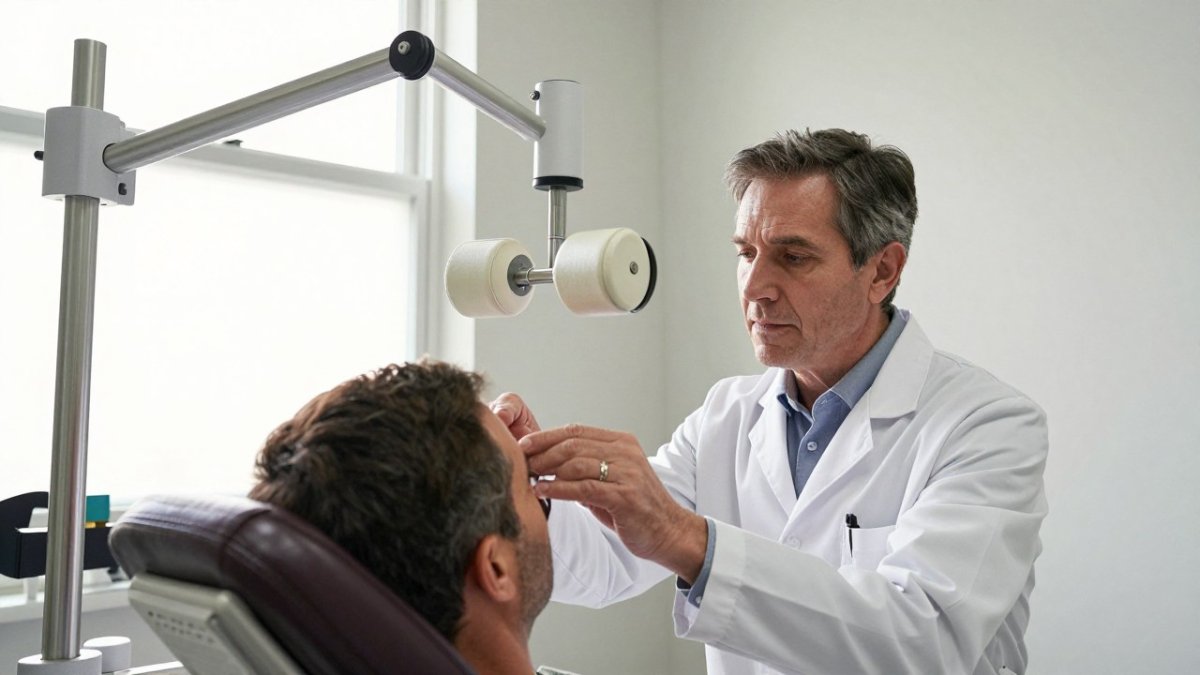
Most people receive TMS sessions 3-5 times per week for 4-6 weeks. Find answers to frequently asked questions about TMS to learn more about what to expect. Some courses extend to 8-12 weeks depending on your response. Each session lasts 20-40 minutes. The magnetic coil is placed against your scalp. You sit comfortably in a treatment chair. The coil delivers magnetic pulses. You stay awake and alert throughout. You can return to work or normal activities immediately after.
Here's what to expect during treatment:
Session 1: The provider locates the right brain area (motor threshold mapping)
Sessions 2+: Standard treatment sessions begin
Week 1-2: You may notice mild side effects (scalp discomfort, headache) that usually fade
Week 2-3: Mood may begin improving
Week 4+: Most people report noticeable improvement
TMS course vs. therapy course, side by side
Most comparisons stop at "TMS is biological, therapy is psychological." A practical comparison is more useful:
Dimension | TMS course | Talk therapy course |
Typical frequency | 3-5 sessions per week | 1 session per week (sometimes 2) |
Session length | 20-40 minutes | 45-60 minutes |
Typical course length | 4-6 weeks (up to 12) | 12-20+ weeks, often ongoing |
Setting | Outpatient clinic, supervised | Office or telehealth |
Your role | Passive, you sit and receive | Active, you talk, practice, reflect |
Between-session work | None required | Homework, skill practice common |
Typical side effects | Scalp discomfort, headache | Emotional discomfort, processing |
That table explains why the two fit together so well. TMS is front-loaded and intensive; therapy is steady and cumulative. A TMS course gives you a concentrated biological push over a few weeks, while therapy builds skills over months. Starting both at once means the biological window and the skill-building window overlap.
Access, insurance, and out-of-pocket costs
Practical barriers often decide treatment more than clinical ones, and most articles skip them. Here is what to expect:
Insurance coverage: Many commercial plans and Medicare cover TMS for treatment-resistant depression when you meet criteria, typically a documented history of failed antidepressant trials. Coverage for other conditions varies. Verify with your plan before starting.
Prior authorization: TMS usually requires prior authorization. Your clinic typically handles the paperwork, but approval can take days to weeks.
Out-of-pocket costs: Without coverage, a full TMS course can run several thousand dollars. With coverage, you typically pay your standard specialist copay or coinsurance per session.
Therapy costs: Talk therapy is often covered under the same behavioral health benefit, though copays and session limits vary by plan.
Time cost: TMS requires 3-5 clinic visits per week for weeks. That is the hidden cost many people underestimate, scheduling, transportation, and time away from work.
Common questions about frequency and timing
How many total sessions? Your provider adjusts based on your response.
Can I do TMS while working? Yes. Sessions are brief. You can fit them before or after work. Many people do morning sessions and go straight to their job.
When do I feel better? Most people notice improvement. Some feel changes earlier. A few take longer. This is why therapy continues during TMS, it supports you while waiting for biological changes.
What happens after the course ends? Your provider creates a plan based on your progress.
Pro Tip Before committing to either course, ask your insurer three questions: Is TMS covered for my diagnosis? What prior authorization is required? What will my per-session cost be after deductible? The answers often determine whether you start TMS, therapy, or both.
Start Your Combined Treatment Plan at Newtown TMS
If talk therapy alone hasn't been enough, or if depression severity makes therapy engagement difficult, combined TMS and therapy offers real hope.
The Newtown TMS approach is different. We combine FDA-cleared TMS with personalized talk therapy. Dr. John Woodall, a former Harvard faculty member, leads treatment personally.
Here's what sets this approach apart:
Physician-led treatment, Dr. Woodall personally administers and monitors your TMS
Combined care, TMS and talk therapy work together from day one
Personalized plans, Your treatment adjusts based on how you respond
Proven outcomes, Patients report meaningful improvement and restored hope
The real question isn't whether TMS can replace talk therapy. It's whether TMS plus talk therapy can give you the relief that neither alone could provide.
Access depression treatment information to learn more about how combined TMS and therapy works for treatment-resistant depression. Schedule your consultation to discuss whether this approach fits your situation.
Frequently Asked Questions
Can TMS replace talk therapy for depression?
No. TMS targets the biological side of depression by stimulating brain cells and neural connections, while talk therapy addresses thought patterns, coping strategies, and emotional processing. Research shows that combining TMS and psychotherapy produces better outcomes than either treatment alone. TMS works best as a complement to therapy, not a replacement.
What should you do if talk therapy doesn't work?
If traditional psychotherapy has not provided enough relief, discuss adding TMS with your mental health provider. TMS may help when talk therapy alone is insufficient by addressing the neurobiological aspects of depression that therapy cannot reach. Your psychiatrist can evaluate whether you're a candidate for TMS and whether combining both treatments makes sense for your specific situation. Many patients benefit from continuing therapy while undergoing TMS to address both brain activity and behavioral patterns.
How often is TMS therapy typically scheduled?
TMS sessions are usually administered 3-5 days per week for 4 to 6 weeks, with each session lasting 20 to 40 minutes. The exact frequency and duration depend on your treatment plan and response. After the initial intensive phase, some patients continue with maintenance TMS sessions at lower frequency to prevent relapse. Your psychiatrist will tailor the schedule to fit your needs and monitor your progress throughout treatment.
Is combining TMS and therapy more effective than either treatment alone?
Yes. TMS addresses depression's biological basis by stimulating brain activity and restoring neural connections, while talk therapy helps you develop coping skills and process emotions. Together, they tackle depression from multiple angles. Research indicates that combining both treatments improves response rates and remission rates compared to either alone. This integrated approach is especially valuable for treatment-resistant depression when medication or therapy alone has not worked.
When depression hasn't responded to medication or therapy alone, combined treatment changes outcomes. Newtown TMS offers the physician-administered care and integrated approach that makes that difference real.
Call Newtown TMS for a free consultation
Add newtowntms.com as a preferred source on Google →


Comments