

Is TMS Therapy Worth It for Severe Depression?

Table of Contents
Is TMS Therapy Worth It for Severe Depression? The Short Answer
TMS Therapy Success Rate for Depression: What the Numbers Show
Why Severe, Treatment-Resistant Depression Responds Differently
TMS vs Antidepressants for Depression: A Side-by-Side Comparison
Pros and Cons of Each Approach
TMS Therapy Side Effects: What to Expect and What to Watch For
How Long Does TMS Treatment Take? Scheduling Around Work
What Physician-Administered TMS Looks Like in Practice
Who TMS Is Worth It For, and Who It Isn't
Conclusion: Making the Decision With a Clinician
Frequently Asked Questions
Last Updated: October 17, 2026
Is TMS Therapy Worth It for Severe Depression? The Short Answer
For many people with severe depression who have not found relief through medication, TMS therapy is worth it. At Newtown TMS, we see this question from adults across Newtown and Fairfield County who have already tried several antidepressants without lasting improvement. Transcranial magnetic stimulation (TMS) is a non-invasive treatment that uses focused magnetic pulses to stimulate nerve cells in brain regions involved in mood regulation, according to [Mayo Clinic's overview of transcranial magnetic stimulation](https://www.mayoclinic.org/tests-procedures/transcranial-magnetic-stimulation/about/pac-20384625). It is not a first-line treatment, and it is not right for everyone. But for the right patient, it can be the difference between years of partial relief and a real return to function.
Below, we break down the success rates, the comparison with antidepressants, the side effects, and the scheduling reality so you can decide with your clinician whether TMS is worth pursuing.
TMS Therapy Success Rate for Depression: What the Numbers Show
Reported outcomes for TMS in depression are genuinely encouraging. A Medical University of South Carolina report on TMS treatment describes complete remission of depression in 62% of patients and a response rate of 83%, with response defined as at least a 50% reduction in symptoms. Those figures come from treated populations, not from every person who walks in the door, so read them as a sign of real potential rather than a promise.
Why Severe, Treatment-Resistant Depression Responds Differently
Severe, treatment-resistant depression is a different clinical picture from mild or moderate depression. Patients who have failed multiple medication trials often have more persistent symptoms and a longer history of illness. That history is exactly why TMS is considered: it works through a different mechanism than drugs, so a patient who did not respond to several antidepressants can still respond to magnetic stimulation.
TMS vs Antidepressants for Depression: A Side-by-Side Comparison
The honest answer is that TMS and antidepressants solve different problems. Medication is easy to start and requires no office visits, but it depends on consistent daily adherence and often brings systemic side effects. TMS requires a committed schedule of office visits but avoids the systemic drug burden that many patients find intolerable.
Factor | TMS Therapy | Antidepressants |
Mechanism | Magnetic pulses stimulate mood-related brain regions | Alters neurotransmitter activity body-wide |
Typical commitment | Daily weekday sessions for several weeks | One daily dose, ongoing |
Common side effects | Scalp discomfort, headache during sessions | Nausea, weight change, sleep changes, sexual side effects |
Stopping treatment | Course ends; effects may be maintained | Tapering needed; discontinuation symptoms possible |
Best for | Patients who failed multiple medication trials | First-line and maintenance treatment |
Pros and Cons of Each Approach
TMS pros: non-invasive, no anesthesia, no systemic drug side effects, and a defined treatment course. TMS cons: a heavy schedule of visits, scalp discomfort during sessions, and a small risk of seizure that clinicians screen for. Antidepressant pros: convenient, well-studied, widely covered by insurance. Antidepressant cons: side effects that many patients cannot tolerate, trial-and-error dosing, and limited benefit for some patients.
TMS Therapy Side Effects: What to Expect and What to Watch For
Most TMS side effects are mild and temporary. The most common complaints are scalp discomfort at the treatment site and headache during or shortly after a session, both of which typically ease as treatment continues. Some patients notice mild facial or jaw twitching while the coil is active. These effects usually stop when the session ends.
More serious risks exist but are uncommon. Seizure is the most significant, which is why a physician screens every patient for seizure history, medications, and other risk factors before treatment begins. If you have a history of seizures, implanted metal devices in the head, or certain other conditions, TMS may not be appropriate for you.
Watch Out Never treat scalp discomfort or headaches as something to push through silently. Report new or worsening symptoms to your treating physician so the protocol can be adjusted.
How Long Does TMS Treatment Take? Scheduling Around Work
A standard TMS course runs about four to six weeks of daily weekday sessions, with each session lasting roughly 20 to 40 minutes. Most patients are in and out of the office in under an hour, which makes early-morning or late-afternoon appointments workable around a job. You do not need sedation, and you can drive yourself home afterward.
Many patients notice early changes within the first couple of weeks, though the full benefit usually builds over the course. If your schedule cannot absorb daily visits for several weeks, that is a real constraint worth discussing honestly with your clinician before you start.
What Physician-Administered TMS Looks Like in Practice
At Newtown TMS, every treatment is physician-administered, and care is personally led by Dr. John Woodall, a former Harvard faculty member. That means a doctor, not a technician alone, is directing your protocol and monitoring your response throughout the course.

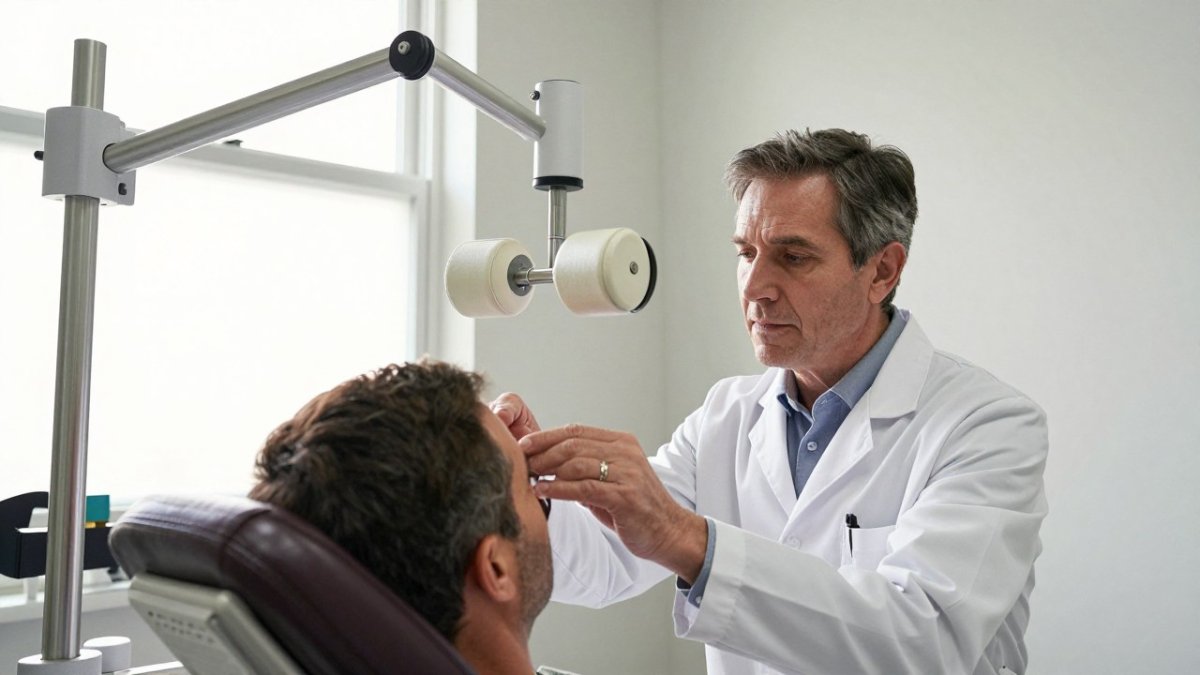
The visit itself is straightforward. You sit in a reclining chair, the physician positions the magnetic coil against your scalp, and the device delivers pulses in a rhythmic pattern. You stay awake the entire time and can read or listen to something during the session. We pair TMS with personalized talk therapy, because symptom relief and the work of rebuilding daily function tend to reinforce each other.
Pro Tip Ask directly how much of your care will be delivered by the physician versus support staff. Physician-administered care is not universal in this field, and it changes how closely your protocol is monitored.
Who TMS Is Worth It For, and Who It Isn't
TMS is worth considering if you have severe depression that has not responded to multiple antidepressant trials, if medication side effects have been intolerable, or if you need maintenance treatment to prevent relapse after remission. It is also a reasonable option for some patients with anxiety, OCD, or PTSD, depending on clinical evaluation.
It is likely not worth it if you have a history of seizures, implanted metal in the head, or unstable medical conditions that a physician flags as contraindications. It is also a poor fit if you cannot commit to the session schedule. Cost and insurance coverage vary by plan, so ask about coverage and out-of-pocket responsibility before committing.
Conclusion: Making the Decision With a Clinician
Deciding whether TMS is worth it for severe depression is not a decision to make alone from a web page. It depends on your treatment history, your risk factors, your schedule, and your coverage. Bring the questions above to a consultation and ask for an honest assessment of your odds.
At Newtown TMS, we offer 100% physician-administered TMS, care personally led by a former Harvard faculty member, no extra cost for that physician-administered model, and TMS combined with personalized talk therapy. Call Newtown TMS for a free consultation and get a clear answer about whether TMS fits your situation.
Frequently Asked Questions
Can TMS help with severe depression?
TMS is cleared by the FDA for treatment-resistant depression, including severe cases where multiple medications have not produced enough relief. Reported outcomes vary by study and patient population, but published figures include remission in roughly 62% of patients and a response rate of about 83% in some programs. Response means at least a 50% reduction in symptoms, not a cure. A clinician can assess whether your specific history makes you a reasonable candidate.
Is TMS worth trying if antidepressants haven't worked?
For many people who have tried several antidepressants without lasting relief, TMS is worth discussing. It works through a different mechanism than medication, so a poor response to drugs does not rule out a response to TMS. The main trade-offs are time commitment and cost. Ask about session frequency, insurance coverage, and what happens if you do not respond partway through a course.
What are the downsides or side effects of TMS therapy?
The most common TMS therapy side effects are scalp discomfort at the treatment site and headache during or shortly after sessions, both usually mild and easing as treatment continues. Some people report transient tingling or facial muscle twitching. Serious adverse events are uncommon but exist, including seizure risk, which is why screening matters. TMS is not associated with the weight gain, sexual dysfunction, or sedation typical of many antidepressants.
How long does a course of TMS treatment take?
A standard course typically runs about six weeks, with sessions five days a week and each session lasting roughly 20 to 40 minutes, depending on the protocol used. Many patients return to work the same day. Maintenance sessions may be recommended after remission to reduce relapse risk. Exact scheduling depends on the protocol your physician selects and how you respond.
What should I ask a TMS provider in Newtown, CT?
Ask who administers each session, how many treatments they have delivered, what protocols they use, and how they handle non-response. Confirm whether a physician is present for treatment or only for intake, and ask how TMS is combined with therapy. Also ask about insurance and what documentation they provide for reimbursement. A free consultation is a reasonable place to get these answers before committing.
Call Newtown TMS for a free consultation


Comments