

How to Find TMS Therapy: A Step-by-Step Guide

Table of Contents
Understand What TMS Therapy Is and Who It Helps
Verify Your Provider's Credentials and Board Certification
Evaluate TMS Therapy Insurance Coverage and Costs
Compare Physician-Administered TMS vs. Technician-Administered
Understand How Long a TMS Therapy Session Takes
Schedule a Consultation and Ask the Right Questions
Review Clinic Reputation and Patient Outcomes
Frequently Asked Questions
Last Updated: September 30, 2026
Understand What TMS Therapy Is and Who It Helps
Transcranial magnetic stimulation (TMS) is a non-invasive brain stimulation treatment that uses magnetic pulses to activate nerve cells in the brain. It's FDA-approved for treating depression and other mental health conditions when traditional medications haven't worked. At Newtown TMS, we help patients who have tried multiple antidepressants without relief find TMS therapy and hope through this evidence-based approach.
TMS works differently than medication: magnetic coils placed against your scalp deliver targeted pulses to specific brain regions involved in mood regulation. Most patients describe the sensation as a tapping feeling rather than pain, with sessions lasting 20-40 minutes.
TMS is particularly effective for treatment-resistant depression (failed 2+ antidepressants), intolerable medication side effects, anxiety, OCD, or PTSD, and patients seeking to avoid or reduce medications. It addresses the neurological basis of depression, making it valuable for those who've exhausted medication options.
Pro Tip TMS doesn't require hospitalization or sedation. You can drive yourself to and from appointments and return to work the same day. This makes it realistic for busy professionals.
Verify Your Provider's Credentials and Board Certification
To find TMS therapy that's right for you, start by verifying provider credentials, as treatment quality depends heavily on who administers it.
Look for these specific credentials:
Board certification in psychiatry from the American Board of Psychiatry and Neurology
Licensed medical doctor (MD) or doctor of osteopathic medicine (DO)
Specialized training in TMS therapy protocols
Membership in professional organizations like the American Psychiatric Association
Someone who is not an MD and calls themself a psychiatrist is misleading you. A psychiatrist is a medical doctor (MD) who has completed a 4 year residency in medicine, neurology and psychiatry. An APRN is an “Advanced Practice Registered Nurse.” They are a registered nurse (RN) who has taken additional training of 1-2 years to learn the very basics of psychiatry. They have not had anywhere near the clinical training or experience of a psychiatrist. Board Certification is the crowning achievement of psychiatrist and is awarded after a psychiatrist has finished their 4 year psychiatric training. There is a rigorous 2 day exam a psychiatrist must pass to become Board Certified. APRNs take a 3.5 hour exam for their board certification that is on an entirely different level of expertise than a Board Certified psychiatrist.
Ask directly: "Is the psychiatrist who will administer my TMS board-certified?" Board certification requires rigorous training, ongoing education, and ethical standards. At Newtown TMS, all treatment is personally administered by Dr. John Woodall, a board-certified psychiatrist and former Harvard faculty member.
Ask: How many TMS patients has the provider treated? What is their track record with treatment-resistant depression?
Watch Out Avoid clinics where technicians (not physicians) administer TMS without physician oversight. Physician-administered care ensures medical expertise and better outcomes for complex cases. Dr. Woodall is the only Board Certified psychiatrist (or APRN) who personally administers TMS to his patients in western Connecticut.
Evaluate TMS Therapy Insurance Coverage and Costs
Insurance coverage for TMS therapy varies significantly by plan. Before committing to treatment, by 2026, virtually all insurance carriers cover TMS. Except for Husky, which doesn’t require prior authorization, all other insurance companies will require that you receive prior authorization for TMS. Understand the appeals process if they deny it.
Step 1: Verify coverage eligibility
Call your insurance company and ask: "Does my plan cover transcranial magnetic stimulation for depression?"
Ask about pre-authorization requirements (most plans require this before treatment starts)
Ask about your deductible, copay per session, and out-of-pocket maximum
Request confirmation in writing (email coverage summary)
Step 2: Understand pre-authorization requirements
Most insurers require pre-authorization before TMS treatment begins. Your psychiatrist's office will submit documentation of your diagnosis, failed antidepressant trials, current medications, and proposed TMS protocol. Reputable clinics handle this paperwork and follow up if the insurer requests additional information. The process typically takes 5-10 business days.
Step 3: Know common coverage scenarios
Most major insurers cover TMS after deductible, with copays. Some plans cover with prior authorization only; others partially cover or exclude TMS (becoming less common).
Step 4: What to do if your claim is denied
Do not accept a denial as final. Request a written explanation and gather additional documentation from your psychiatrist: detailed medication trial history, symptom severity scores (PHQ-9 or GAD-7), and functional impairment documentation. File a formal appeal within 30 days with this documentation and a letter from your psychiatrist explaining medical necessity. If the denial cites "experimental" status, note that TMS has FDA approval for major depressive disorder, OCD, and migraines. If the internal appeal is denied, request an independent external review through your state's insurance commissioner's office, a free process that often succeeds.
Watch Out Do not delay treatment while appealing a denial if your psychiatrist believes TMS is urgent. Ask about payment plans or temporary out-of-pocket options while the appeal is pending. Many clinics will hold your treatment slot for 2-4 weeks during the appeals process.
Common denial reasons and how to counter them:
Denial Reason | How to Counter |
"Insufficient evidence of antidepressant failure" | Provide detailed trial history with dates, dosages, and duration at therapeutic levels (typically 4-6 weeks minimum per medication) |
"Patient has not tried enough medications" | If you've tried 2+ medications at adequate doses, this meets clinical criteria. Reference American Psychiatric Association guidelines. |
"TMS is experimental" | Cite FDA approval status and inclusion in major clinical guidelines (NICE, VA/DoD, APA). |
"Not medically necessary" | Provide PHQ-9 scores showing moderate-to-severe depression and documentation of functional impairment. |
"Requires prior psychiatric hospitalization" | This is not a standard requirement. Challenge this if your insurer cites it; most plans do not require hospitalization history. |
Step 5: Understand out-of-pocket costs
Typical out-of-pocket costs for patients WITH insurance include copay per session, total for sessions, and deductible (if not yet met).
Key Takeaway Don't assume cost without checking your specific plan and don't accept a denial without appealing. Insurance coverage for TMS therapy has expanded significantly in recent years, and many patients find treatment is more affordable than expected once they understand their actual out-of-pocket responsibility and pursue appeals when necessary.
Your psychiatrist's office should be transparent about insurance logistics. A clinic that handles pre-authorization, explains your coverage clearly, and supports you through an appeal is a sign of a professional, patient-centered practice.
Compare Physician-Administered TMS vs. Technician-Administered
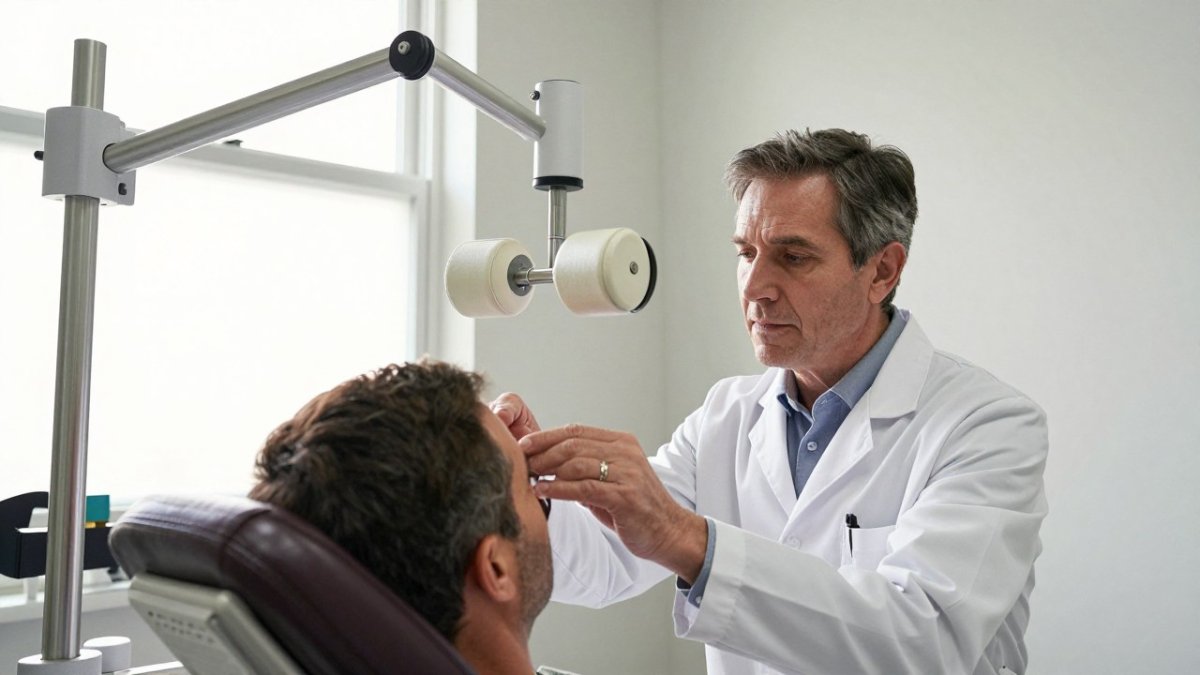
Physician-administered TMS: A board-certified psychiatrist personally places the coil and monitors your response, allowing real-time adjustments. This produces better outcomes for treatment-resistant depression and complex cases.
Understand How Long a TMS Therapy Session Takes
Typical session timeline: Setup and preparation (5-10 minutes), active stimulation (20-40 minutes), post-session assessment (5 minutes), total appointment time (30-50 minutes). You'll attend sessions 5 days a week for 4-6 weeks during the intensive phase, then transition to maintenance sessions (1-2 times per week). No anesthesia or sedation is needed; you can drive yourself and return to work immediately.
Pro Tip Schedule appointments early morning or late afternoon if you work full-time. Many patients fit TMS around their work schedule without taking significant time off. The key is consistency, missing sessions delays your progress.
Schedule a Consultation and Ask the Right Questions
The consultation is your opportunity to assess whether a clinic is right for you, whether the provider understands your specific situation, and critically, whether you are medically safe to receive TMS.

Critical: Assess your own contraindications before scheduling
Absolute contraindications (TMS is not safe):
Metallic implants in head/neck region (cochlear implants, medication pumps, aneurysm clips, ferromagnetic implants within 30 cm of coil) Call Newtown TMS for a free consultation →
Implanted electronic devices (pacemakers, ICDs, vagus nerve stimulators, deep brain stimulation devices)
Uncontrolled seizure disorder
Increased intracranial pressure from space-occupying lesions (brain tumors, large cysts)
Pregnancy (not extensively studied; defer unless depression poses greater risk)
Recent stroke or head trauma (within 3 months)
Uncontrolled hypertension (>180/110 mmHg)
Severe cardiac disease (recent MI, unstable angina)
Active substance use disorder
Bipolar disorder (requires mood stabilizer coverage and monitoring)
Psychotic disorders
Medications that lower seizure threshold
Watch Out During your consultation, your psychiatrist MUST ask about all implants, devices, and medical history. If you have any of the relative contraindications listed above, ask explicitly: "Is TMS still safe for me, or should we consider alternatives like ketamine therapy or ECT?" A thorough psychiatrist will not skip this screening.
Essential questions to ask during consultation:
About your specific case: What is your experience treating treatment-resistant depression with my medication history? How many TMS patients have you treated, and what are your remission rates? What does a typical treatment course look like for me? How do you integrate talk therapy with TMS? Will you adjust the protocol if I'm not improving after 2-3 weeks?
About safety and side effects: What are the most common side effects and their frequency? What is your seizure rate? How do you monitor for adverse events? Have you treated patients with [your specific medical condition]?
About logistics and outcomes: How do you handle insurance pre-authorization? What are the actual costs and payment options? What is your typical time to meaningful symptom improvement? Do you track long-term outcomes (6 months, 1 year)? How often will I see you versus a technician?
About alternatives: If TMS doesn't work, what is the next step? Why do you think TMS is the best option for me?
Review Clinic Reputation and Patient Outcomes
Key Takeaway Patient testimonials matter, but clinical data matters more. Ask for both. A clinic that can cite specific remission rates and long-term outcomes is more trustworthy than one that relies only on individual success stories.
Ask: How long has the clinic been operating? Are providers affiliated with medical schools or teaching hospitals? Does the clinic participate in continuing education and research? Clinics with strong institutional affiliations and stable staffing maintain higher quality standards.
Frequently Asked Questions
What qualifications should I look for in a TMS provider?
Look for a board-certified psychiatrist or physician with specific training in transcranial magnetic stimulation. Verify they have completed accredited TMS certification programs and check their credentials through the American Board of Psychiatry and Neurology (ABPN). Ask about their experience treating depression and whether they personally administer TMS sessions. Physician-administered TMS ensures higher clinical oversight and better outcomes than technician-administered protocols.
How do I get insurance approval for TMS therapy?
Contact your insurance company directly to confirm TMS therapy coverage and request pre-authorization before scheduling treatment. Your healthcare provider will submit clinical documentation showing you've tried multiple antidepressants without adequate response, which is typically required for approval. Ask your TMS clinic if they handle pre-authorization paperwork on your behalf—many clinics manage this process to reduce your administrative burden and speed up approval.
Does TMS therapy require a referral from a psychiatrist?
Requirements vary by insurance plan and clinic. Some insurers require a referral from your primary care physician or psychiatrist, while others do not. Contact your insurance company and your chosen TMS clinic to confirm their specific requirements. Many patients benefit from having an established relationship with a psychiatrist who can provide documentation of failed medication trials, which strengthens insurance pre-authorization requests.
What disqualifies someone from TMS therapy?
Certain conditions may prevent TMS treatment, including implanted metal devices near the head (pacemakers, cochlear implants), active substance use disorders, or uncontrolled seizure disorders. Pregnancy is not an absolute contraindication but requires careful evaluation. A qualified psychiatrist will conduct a thorough clinical assessment and safety screening during your consultation to determine if TMS is appropriate for your specific situation.
Call Newtown TMS for a free consultation


Comments