

7 Steps in a TMS Treatment Plan for Anxiety Disorders

Quick Summary
TMS therapy for anxiety disorders is a noninvasive treatment that sends short magnetic pulses through a coil on the scalp to stimulate brain circuits involved in mood and emotional control. Its strongest evidence is for generalized anxiety disorder and anxiety that occurs alongside depression, while support for panic and social anxiety is more limited. A clinician should evaluate whether it fits your diagnosis before you start.
Evaluation comes first, covering symptoms, medical history, past treatments and any implanted metal.
Evidence is strongest for generalized anxiety disorder and for anxiety that occurs alongside depression.
Panic disorder and social anxiety have thinner evidence and are best discussed as emerging options.
Ask your provider whether your diagnosis is FDA-cleared or an evidence-informed off-label use.
Do not stop medication or psychotherapy on your own because TMS is going well.
Table of Contents
What TMS Therapy Is and How It Works in the Brain
Last Updated: November 2, 2026
Transcranial magnetic stimulation, or TMS, is a noninvasive treatment that uses magnetic pulses to stimulate nerve cells in the brain. Research describes TMS as a method of stimulating neurons through the scalp and skull, with clinically significant decreases in anxiety reported in the reviewed literature (2019 PubMed Central review of TMS for anxiety disorders).
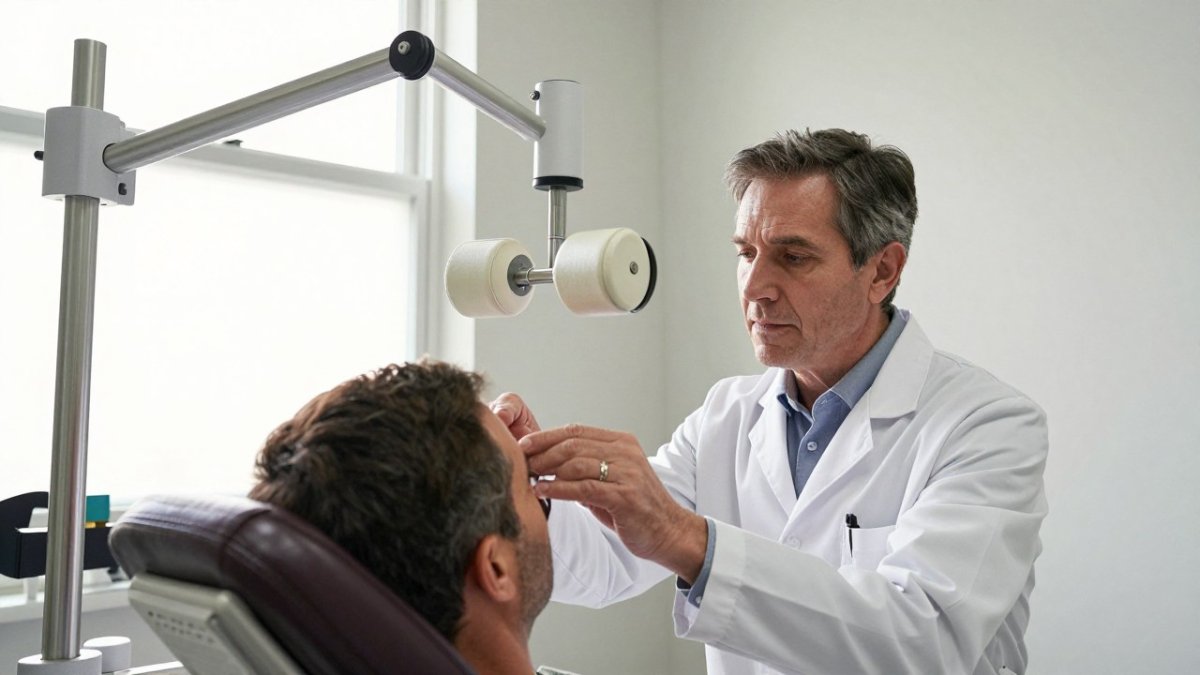
Transcranial magnetic stimulation (TMS) is a treatment that sends short magnetic pulses through a coil placed against the scalp. The pulses pass through the skull and reach targeted brain circuits.
The coil is placed on the head during each session, and the patient stays awake and seated. Most patients feel a tapping sensation on the scalp. The pulses are designed to activate brain regions involved in mood regulation and emotional control.
Many anxiety symptoms involve an overactive fight-or-flight response. TMS aims to change activity in those circuits over repeated sessions. It does not work like a pill that moves through the whole body. It targets specific areas, which is why it is sometimes called a targeted approach.
What the Research Shows About TMS for Anxiety Disorders
The research on TMS for anxiety is real but uneven, and the strength of the evidence depends heavily on which anxiety disorder you are asking about. That distinction matters more than any single headline number, because it determines whether TMS is an established option, an emerging one, or an off-label conversation with your clinician.
Start with regulatory status
In the United States, the Food and Drug Administration (FDA) has cleared TMS devices for certain conditions, most established for major depressive disorder. Check the official FDA labeling for the current list of cleared indications. For anxiety disorders specifically, FDA clearance is narrower than media coverage sometimes implies. Generalized anxiety disorder is not a stand-alone cleared indication for most TMS systems; much of the anxiety evidence comes from patients treated for depression who also had comorbid anxiety, or from investigator-initiated studies.
A 2019 systematic review and meta-analysis in PubMed Central concluded that TMS may be effective for generalized anxiety disorder and PTSD, but the authors noted small sample sizes and heterogeneous protocols (2019 systematic review and meta-analysis on TMS for anxiety and trauma-related disorders). A 2022 meta-analysis in the International Journal of Neuropsychopharmacology reported that active TMS reduced generalized anxiety scores by 1.857 standard deviations versus sham, a large effect size, but one drawn from a literature base that still needs replication (2022 meta-analysis in the International Journal of Neuropsychopharmacology).
How the evidence differs by disorder
Generalized anxiety disorder (GAD): The strongest anxiety-specific signal. Multiple meta-analyses report reductions in anxiety rating scales, but most trials are small and often enroll patients with comorbid depression. Effect sizes look encouraging; certainty is moderate at best.
Panic disorder: Evidence is thinner and more mixed. Some small trials and case series suggest benefit, particularly when panic co-occurs with depression, but there is no large sham-controlled trial that would justify calling TMS an established panic treatment.
Social anxiety disorder: The literature is sparse. A handful of small studies and case reports exist, but this is best described as emerging or off-label territory.
Anxiety alongside depression: This is where the evidence is most practical. Because TMS is cleared for depression and many depressed patients have anxious distress, a large share of real-world anxiety improvement is observed in patients treated for depression.
PTSD and trauma-related anxiety: A 2019 review found support for TMS in PTSD, and deep TMS has been studied here as well, but protocols vary and access is inconsistent.
What the numbers actually mean
Response rates in anxiety trials are meaningful but not universal, and a non-significant result in a small study does not necessarily mean the treatment failed.
Key Takeaway Ask your provider three questions before starting: (1) Is my specific diagnosis an FDA-cleared indication or an evidence-informed off-label use? (2) What does the evidence look like for my diagnosis specifically, not for anxiety in general? (3) How will we measure whether it is working for me?
Why the evidence is harder to pin down for anxiety
Anxiety trials face a design problem that depression trials do not: anxiety symptoms fluctuate with circumstance, sleep, caffeine, and life events, which makes sham-controlled differences harder to detect. Many studies also allow concurrent medication or psychotherapy, which blurs attribution. And because TMS is often delivered to the dorsolateral prefrontal cortex, a target validated for depression, researchers are still working out whether anxiety needs a different target, dose, or laterality. That is why the field increasingly talks about personalized protocols rather than one-size-fits-all anxiety treatment.
The honest summary: TMS for anxiety is promising, with the strongest support for GAD and anxiety comorbid with depression. Evidence for panic and social anxiety is more limited. A good clinician will say this plainly rather than oversell it.
Step 1: Get a Screening and Diagnostic Evaluation
The first step in a TMS treatment plan is a full evaluation. A clinician reviews your symptoms, medical history, and past treatments. This shows whether TMS is a reasonable option for your situation.
Expect the evaluation to cover:
Current anxiety or depression symptoms and how long they have lasted
Medications and therapies you have already tried
Medical conditions and any history of seizures or implanted metal
Goals for treatment and how symptoms affect work and daily life
This screening step is not a promise of treatment. Some people are better suited to other care.
Step 2: Build a Personalized TMS Treatment Protocol for Anxiety
After evaluation, the care team designs a treatment protocol. A protocol sets the stimulation target, intensity, and session settings. These choices depend on your diagnosis and how your brain responds.
Newtown TMS offers 100% physician-administered care, led by Dr. John Woodall, a former Harvard faculty member.
Some patients also receive talk therapy alongside TMS, which can address both brain-based symptoms and the thoughts and habits that drive anxiety.
Step 3: Understand TMS Treatment Duration and Session Schedule
A typical TMS course is more structured than "a few weeks of sessions." Knowing the actual cadence helps you plan around work, arrange transportation, and judge progress fairly instead of guessing.

The standard acute course
Most protocols follow a similar shape, though the exact numbers depend on the device, the diagnosis, and your clinician's plan:
Session length: Varies by protocol; your provider will explain how long your sessions will take.
Frequency: Schedules vary; ask your provider about the frequency recommended for your protocol.
Acute course length: Varies by protocol and response, and your provider will set the length for your situation.
Progress checks: Your provider can explain how and how often your symptoms will be reassessed during treatment.
What a typical week looks like
A common pattern is a Monday-through-Friday schedule with sessions booked at the same time each day to reduce planning friction. Many patients return to work or normal activities immediately after a session; the main after-effects reported are mild scalp discomfort or fatigue, not sedation. If you drive yourself, ask whether the clinic requires a first-session observation period, policies vary.
Pro Tip Ask about scheduling options before you commit so the course fits your routine.
Taper and maintenance
Not every patient goes straight from daily sessions to done. Some patients follow a taper or maintenance schedule after the acute course. This is a clinical decision and should be discussed with your provider.
How progress is measured
Clinicians often track anxiety symptoms with validated rating scales at baseline and during treatment. Meaningful improvement is usually defined as a reliable drop in score, not necessarily remission. Because anxiety and depression often travel together, many clinics also track mood. Ask to see your scores; a provider who shares them is giving you a way to judge whether the course is worth continuing.
What happens after the course
The end of the acute course is a decision point, not a finish line. A reasonable post-course plan includes:
A final symptom assessment compared with baseline
A written summary of response and any side effects
A maintenance or taper recommendation, or a clear rationale for stopping
Coordination with your prescribing clinician and therapist so medication and psychotherapy continue without gaps
A relapse-monitoring plan, what symptoms to watch for and who to call if anxiety worsens
Watch Out Do not stop prescribed medication or psychotherapy on your own because TMS is going well. TMS is often used as an addition to a care plan, and abrupt changes to treatment should be coordinated with your clinician. Learn how to start TMS for OCD treatment for a related guide. Coordinate any changes with the clinician who manages your medications.
Cost, coverage, and access questions to ask
Pricing and insurance coverage vary, so contact Newtown TMS directly for current pricing and coverage details. Before booking, ask: Is this diagnosis covered by my plan? What is the out-of-pocket cost per session and for the full course? Is a prior authorization required, and who submits it? What is the cancellation policy? Getting these answers in writing prevents surprises mid-course.
A scheduling calendar showing a five-day-a-week TMS course with taper sessions marked in a different color.
Step 4: Know the Side Effects, Safety Factors and When to Seek Urgent Help
TMS is generally well tolerated, but it carries risks. Scalp discomfort at the coil site and headache are commonly reported side effects.
Tell your provider right away about any seizure, fainting, or severe headache. Read about TMS therapy safety for adults for more detail on risk. Certain medical conditions and implanted metal can affect whether TMS is appropriate, so full disclosure at screening is important.
For a broader look at what to expect, read TMS Therapy Side Effects: A Complete Guide.
The main safety points from this section are summarised below so they are easy to scan.
Concern | What the article says | Action |
Common side effects | Scalp discomfort at the coil site and headache | Mention them to your provider |
Seizure, fainting or severe headache | Tell your provider right away | Report immediately |
Medical conditions and implanted metal | Can affect whether TMS is appropriate | Disclose fully at screening |
Booking Your Consultation to Start TMS Therapy
If you are considering TMS therapy for anxiety disorders, the next step is a conversation with a clinician. Book your TMS consultation in Newtown, CT to start that conversation. Newtown TMS offers a free consultation to review your history and answer your questions. Follow the step-by-step guide to booking a TMS consultation to see what to prepare. Call Newtown TMS to find out whether TMS fits your situation.
Frequently Asked Questions
Can TMS therapy help anxiety disorders?
Research suggests TMS may reduce anxiety symptoms, particularly in generalized anxiety disorder and PTSD. Some meta-analyses report reductions in anxiety scores compared with sham treatment. However, the evidence is still developing, and results vary between studies. Anyone considering TMS for anxiety should discuss their specific symptoms, history and goals with a qualified physician before starting treatment.
Is TMS FDA-approved for anxiety disorders?
TMS is FDA-cleared for certain conditions, most established for major depressive disorder. Check the official FDA labeling for current cleared indications. Off-label use is a legitimate clinical practice, but it means the evidence base is less settled than for approved indications. Ask your provider to explain how their use of TMS fits within current FDA clearances and what evidence supports their recommendation.
How many TMS sessions are needed for anxiety?
The exact schedule depends on the protocol your physician recommends and how you respond. Your provider will track symptoms throughout treatment to decide whether to continue, adjust or stop the course.
Can TMS make anxiety worse?
Most people tolerate TMS well, but side effects such as scalp discomfort, headache and lightheadedness can occur. Rarely, seizures are reported, which is why screening for seizure history and other risk factors is essential before treatment. Report any new or worsening symptoms to your care team right away, and seek emergency care for serious symptoms.


Comments